Home › Blog › Restaurant Site Selection: How to Pick a Site
Restaurant Site Selection: How to Pick a Site
By Priya Mehta · Thu Feb 26 2026
The restaurant site selection process: the seven factors operators check, the common mistakes, and how to cut risk before signing a lease.
The short answer
Choose a restaurant site by checking customer fit, access, total occupancy cost and whether the premises can support your kitchen. Resolve deal-breakers first. Then compare viable sites using the same evidence and scoring weights.
Compare two sites without letting one attractive feature decide
- Before scoring, ask a qualified local professional to verify permitted use and the approvals your format needs. Confirm ventilation, drainage, water, power and waste arrangements with the landlord.
- Request a written breakdown of rent, deposit, maintenance, escalation and fit-out obligations. Observe entrance visibility, crossing barriers, delivery access and customer activity.
- Choose weights before scoring: for example customer fit 30%, access 25%, cost 25%, operational fit 20%. Score each from 1–5, attach evidence and mark unknowns rather than guessing.
Illustrative comparison: with those weights, Site A scores 4, 3, 2, 4 → 3.25/5. Site B scores 3, 4, 4, 3 → 3.50/5. B ranks higher under these assumptions, but an unresolved permission or kitchen constraint can rule either out regardless of score.
Open the printable restaurant site scorecard · Compare two restaurant locations interactively
Restaurant site selection is the process of systematically evaluating potential locations for a restaurant before committing to a lease. Most operators skip this process entirely. They fall for a space because it looks right, the rent seems reasonable, or the landlord is easy to deal with. Then six months later, they realise foot traffic is half of what they expected and the competition two doors down is taking most of the trade. According to the National Restaurant Association, location remains one of the most cited reasons for both restaurant success and early failure. The location was never right. The analysis was never done.
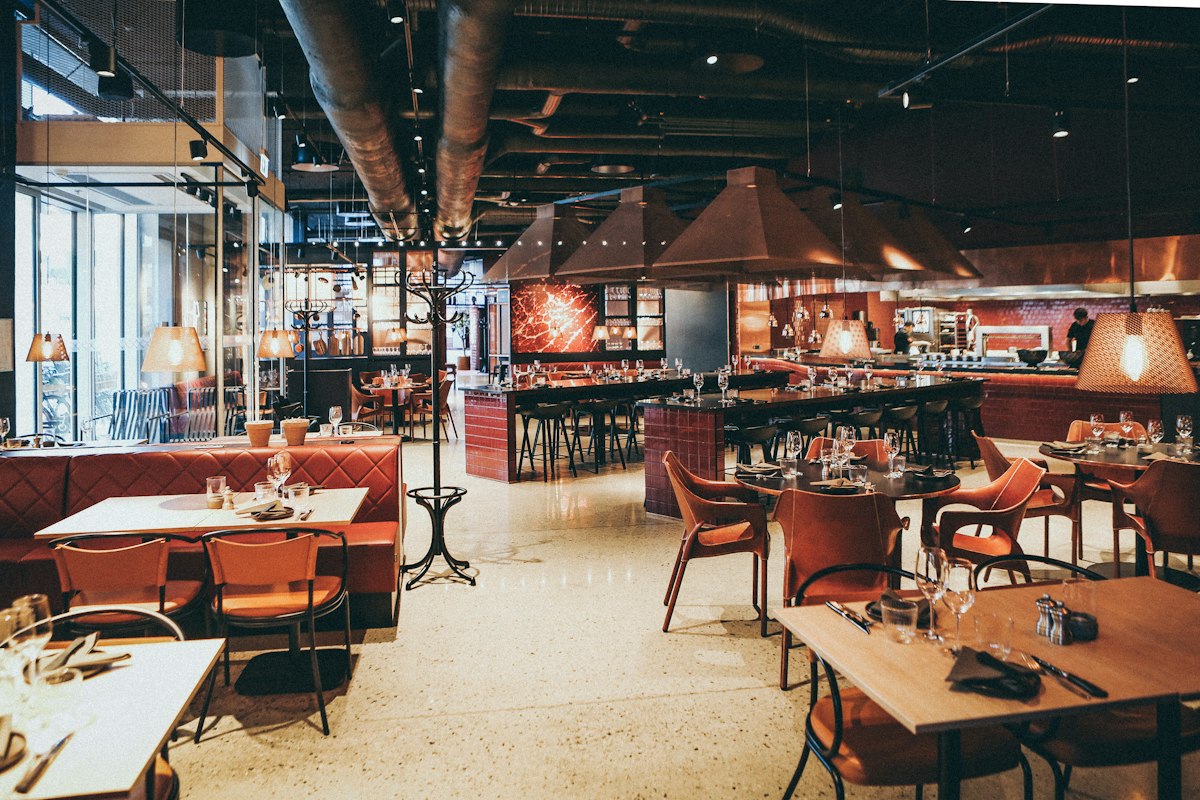
What Is Restaurant Site Selection?
Restaurant site selection is a structured evaluation of a potential restaurant location using data rather than instinct. It covers foot traffic patterns, demographic profiles, competition density, lease viability, visibility, and neighbourhood trends. Major chains run formal site selection programmes before approving a single new location. Independent operators rarely have the same resources, but the principles are identical. The goal is to replace guesswork with evidence before you commit to a long lease.
The 7 Factors Every Operator Must Check
1. Foot Traffic Volume and Quality
The first thing to check in any restaurant site selection exercise is foot traffic. Not just how many people pass the door, but who they are and what they are doing. A street with 10,000 daily pedestrians sounds excellent, but if most of them are commuters rushing between a station and an office block, they are not stopping to eat. You want foot traffic that is browsing, waiting, or already in a food mindset. Dwell time and intent matter as much as volume.
2. Visibility and Accessibility
Visibility means whether your frontage can be seen from the street, from approaching traffic, and from the natural walking path through the area. Accessibility means customers can reach your door without friction. A basement entrance, a location set back from the street, or a spot that requires crossing a busy road all create barriers. Every extra second of effort a customer has to make to reach you reduces the probability they visit at all.
3. Demographic Match
The local population needs to match your concept. A high-end steakhouse needs a catchment area with sufficient household income and a culture of dining out. A fast-casual lunch spot needs office workers, students, or shoppers who eat out regularly. Check the income levels, age distribution, and lifestyle profile within a 1km and 3km radius. Our demographics and business location guide explains how to interpret this data in practical terms.
4. Competition Density
Competition can work in your favour. A cluster of restaurants can create a dining destination that draws more customers into an area than a single venue would. But you need to check whether there is genuine market space for your concept. Map every direct and indirect competitor within 500 metres. For a step-by-step approach to this process, see our guide on how to analyse competition before opening a business.
5. Rent-to-Revenue Ratio
A common benchmark is to keep rent below 8 to 10 percent of projected monthly revenue. If your realistic monthly turnover is $40,000, your target rent should be below $4,000 per month. Anything above 12 percent starts to compress margins to the point where profitable operation becomes very difficult. Our detailed breakdown of the rent-to-revenue ratio for restaurants and retail covers how to apply this metric to your specific numbers.
6. Parking and Transport Links
For town centre or high street locations, proximity to public transport often matters more than parking. For suburban or out-of-town sites, parking becomes critical. A restaurant that is difficult to reach by either car or public transport is entirely dependent on its immediate neighbourhood for trade. That limits your catchment area and your revenue ceiling significantly.
7. Neighbourhood Trajectory
Is the area improving or declining? New residential development, incoming anchor retailers, infrastructure projects, and rising property values all signal an improving area. Opening in a neighbourhood on an upward trajectory means your customer base grows with you over the life of your lease. Opening in a declining area means competing for a shrinking pool of spending, year after year.
How to Run a Restaurant Site Analysis
A practical site analysis follows a clear sequence. Start by defining your target customer profile in detail. Then identify the catchment area your concept needs to work. Next, gather data on foot traffic, demographics, competition, and lease terms for each candidate site. Score each location against your criteria. Then visit every shortlisted site on a weekday morning, a weekday lunch period, a weekday evening, and a weekend day before making any decision. The US Small Business Administration also provides a solid framework for evaluating business locations that applies well to restaurants.
- Define your target customer profile before looking at any locations
- Visit each site at multiple times of day and on different days of the week
- Count or track foot traffic and assess the quality and intent of pedestrian movement
- Map all direct and indirect competitors within 500 metres
- Request trading history or footfall data from the landlord or previous tenant
- Run the rent-to-revenue calculation before falling in love with a space
- Check planning permissions for signage, outdoor seating, and late-night operation
- Review lease break clauses and exit terms before looking at renewal terms
Using Location Intelligence Tools
Location intelligence platforms can pull together foot traffic data, demographic analysis, competition mapping, and market data in a single report. What used to take weeks and cost thousands is now accessible to independent operators. Spotfic generates a complete location analysis for any address, including a competitive overview, demographic profile, and market sizing. Before running your analysis, use our location analysis checklist to make sure you are asking the right questions before you start.
Common Restaurant Site Selection Mistakes
- Choosing a location because the rent is cheap without investigating why it is cheap
- Visiting the site only once, at one time of day, before committing
- Ignoring demographic data and assuming the concept will pull customers from further away
- Underestimating existing competition targeting the same customer type
- Focusing on the interior of the space rather than the external trading environment
- Accepting landlord foot traffic estimates without independent verification
- Signing a long lease without negotiating break clauses or rent review protections
Thorough restaurant site selection does not guarantee success. But skipping it dramatically increases the probability of failure. Most restaurants that close in year one picked the wrong location. Very few of them knew it before they signed.
Where to Lease the Best Restaurant Locations
Once you know how to evaluate a site, the next question is where to lease. The best restaurant rental locations balance high, food-intent foot traffic against a rent-to-revenue ratio you can actually sustain. Below are our top picks for restaurant rental locations, ranked by how reliably they turn passers-by into covers.
- High-street units near a transport hub with strong evening footfall
- Ground-floor corner sites with dual-street visibility and signage
- Retail-park and mall food courts riding anchor-tenant draw
- Mixed-use developments with combined resident and office catchment
- Emerging neighbourhoods on a clear upward development trajectory
Whichever you choose, run the numbers before you sign the lease. Spotfic scores any address for competition, foot traffic, demographics and rent viability, so you can compare rental locations on evidence instead of leasing on instinct.
Frequently Asked Questions
How long does restaurant site selection take?
A thorough process takes between two and eight weeks depending on how many sites you are evaluating. Rushing the process to meet a deadline is one of the most common and costly mistakes operators make.
Should I use a commercial real estate agent for site selection?
A good agent helps surface off-market options and negotiate lease terms. But agents do not conduct the location analysis for you. Run your own evaluation independently of the agent's enthusiasm for a specific space.
What is the single most important factor in restaurant site selection?
There is no single factor. Foot traffic, demographics, competition, and lease terms all interact. A high foot traffic location with the wrong demographic profile will still underperform.
Can I do restaurant site selection without specialist tools?
Yes. Google Maps helps with competition mapping, government portals provide planning data, and census data covers demographics. Specialist tools accelerate the process but the fundamentals can be done manually with some effort.
Explore related location guides
- Restaurant location analysis
- How Spotfic works
- Best site selection tools (2026)
- Browse all cities & business types
More from the Spotfic blog
- Location Analysis vs. Gut Feeling: Why Data Wins
- The 90-Day Launch Plan: From Location Analysis to Grand Opening
- Top 10 Location Mistakes That Sink New Businesses
- The Rent-to-Revenue Ratio: How Much Should You Pay for Your Business Location?
- Franchise vs Independent Business: Which Is Right for Your Location?
About Spotfic
Spotfic is an AI-powered location analysis tool for founders, franchise owners and expansion teams. Get competitor mapping, foot traffic, rent estimates, demographics and a Go/No-Go score for any address in under 60 seconds.